Why AI Medical Mapping Tools Are a Game-Changer
Most people think AI in healthcare is only about robots replacing doctors or futuristic machines making decisions on their own. That’s not true at all. In reality, AI tools like an AI medical mapping tool are here to help doctors, not replace them. Instead of taking over the human touch, they give healthcare professionals smarter insights, faster data analysis, and more accurate maps of the human body.
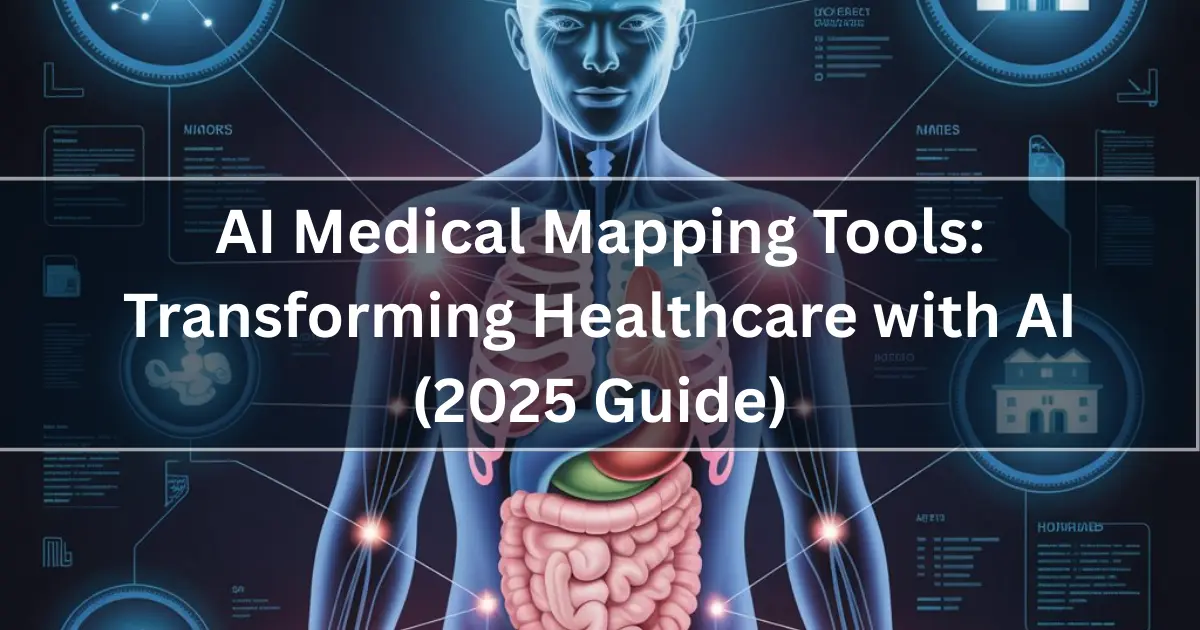
Imagine a doctor trying to find hidden disease patterns inside the body the same way we look for routes on Google Maps. That’s exactly the idea behind these tools. An AI medical tool for healthcare takes loads of medical data — from scans, lab results, and patient histories — and organizes it into a “map” that shows what’s happening in the body.
Why does it matter? Well, time is everything in healthcare. Faster and clearer diagnosis means treatment can start earlier. For patients, this means fewer unnecessary tests, lower costs, and more personalized treatment plans. For doctors, it means less guesswork and more confidence in decision-making. And for hospitals, it can save resources while improving care quality. That’s why the AI medical mapping tool is being seen as a true game-changer.
According to the World Health Organization, AI is already reshaping the future of global healthcare by improving diagnosis and treatment outcomes.
What is an AI Medical Mapping Tool? (Breaking It Down)
If you’re still wondering what exactly is an AI medical mapping tool, let’s keep it simple. Think of it as Google Maps for the human body. Just like Google Maps helps you see roads, shortcuts, and traffic patterns, an AI mapping software for healthcare helps doctors see inside the body, spot disease patterns, and even predict what might happen next.
Here’s how it works in plain English:
- The tool gathers medical data — like MRI scans, CT scans, or electronic health records.
- AI algorithms then scan through this data, spotting tiny details that are hard for the human eye to catch.
- The result? A clear “map” that shows doctors where the problem is and what path treatment should take.
This kind of AI mapping tool in medical imaging is transforming how doctors look at things like tumors, brain activity, or heart conditions. Instead of just relying on traditional imaging, the AI tool highlights patterns and anomalies quickly, which helps in clinical decision-making.
For example, let’s say a doctor is reviewing a brain MRI. Traditional methods might take hours and even then, some tiny patterns could be missed. But with an AI medical mapping tool, the system can immediately highlight areas of concern, compare it with thousands of past cases, and give doctors a data-backed suggestion. That doesn’t just save time; it also increases accuracy, reducing the chances of misdiagnosis.
In short, an AI medical mapping tool is not some complicated tech-only gadget — it’s a smart assistant built to help healthcare professionals work better, faster, and more accurately.
Benefits of Using AI Medical Mapping Tools in Healthcare
Most people think AI in healthcare is just about robots or machines replacing doctors. That’s not true at all. In reality, AI medical mapping tools are more like a super-smart assistant for doctors. They don’t replace the expert’s eye — they sharpen it. Let’s break down how these tools are changing the way healthcare works.
1. Faster Disease Detection
Think about how long it usually takes to diagnose complex diseases like cancer or heart conditions. Doctors often need multiple tests, scans, and second opinions. But with an AI medical mapping tool, the process becomes way quicker.
By analyzing thousands of medical images and spotting hidden patterns, AI-powered healthcare mapping tools can detect early signs of diseases like tumors, brain disorders, or cardiovascular issues that humans might miss at first glance. This means faster results, earlier treatments, and in many cases, better chances of recovery.
2. Accuracy Improvement with AI-Powered Insights
One of the biggest benefits of AI in healthcare mapping is its accuracy. Let’s be honest — human error in diagnosis can happen, especially with complicated cases. But AI-powered medical mapping software uses advanced algorithms to minimize those risks.
For example, AI can highlight abnormal cell growth on scans, compare it with millions of other patient records, and suggest what’s most likely happening. This gives doctors a clearer view and helps avoid misdiagnosis.
3. Cost Reduction for Hospitals & Clinics
Healthcare is expensive — not just for patients but also for hospitals. Running tests, repeating scans, and managing errors add up quickly. Here’s where AI medical mapping tools save the day.
By making disease detection faster and more accurate, these tools reduce unnecessary tests, shorten hospital stays, and cut down on repeat imaging. In short, they save time, money, and resources. Hospitals can focus their budgets on better patient care rather than correcting mistakes.
4. Personalized Medicine Using AI Mapping
This is where it gets exciting! Imagine going to the doctor and getting treatment designed just for you. With AI medical mapping, this is becoming possible.
Instead of giving the same treatment to everyone, AI studies a patient’s scans, genetic data, and medical history to create a plan that’s customized. For example, two cancer patients may have the same diagnosis, but their treatment paths could be very different based on how their bodies respond. That’s personalized medicine powered by AI.
Best Use Cases of AI Medical Mapping Tools (Real-World Examples)
When people first hear about AI in healthcare, they often think it’s just some futuristic tech doctors might use someday. But the truth is, AI medical mapping tools are already being used in hospitals, labs, and research centers worldwide—and they’re quietly transforming the way diseases are detected, treated, and even prevented. Let’s break down some of the real-world use cases where AI mapping tools are proving to be total game-changers.
1. AI Medical Imaging Tool for Cancer Detection
Think about how cancer is usually diagnosed. A doctor looks at MRI scans, X-rays, or CT images and tries to spot irregular patterns. But here’s the issue: even the most experienced radiologists can sometimes miss early signs. That’s where AI medical imaging tools for cancer detection step in.
These tools can scan thousands of images within seconds, highlight suspicious areas, and even predict how aggressive a tumor might be. For example, an AI disease mapping software can detect lung nodules on chest scans that are too tiny for the human eye to notice. This means patients get diagnosed earlier, treatments start sooner, and survival rates go up.
Recent studies published on PubMed highlight how AI-based imaging tools can detect tumors at an early stage, sometimes more accurately than human specialists.”
2. AI Mapping Tool in Cardiology (Heart Disease Risk Mapping)
Heart disease is still the #1 killer worldwide. Traditionally, doctors use ECGs, cholesterol tests, and patient history to assess risks. But with an AI mapping tool in cardiology, the game changes.
By analyzing large datasets from heart scans, blood test results, and even wearable devices, AI can map out a patient’s risk profile with incredible precision. Imagine being able to predict a heart attack before it happens—this is what AI-powered cardiology mapping software is working towards.
Hospitals already use these tools to personalize treatment plans, from recommending lifestyle changes to adjusting medications. Instead of one-size-fits-all advice, AI helps doctors give targeted, data-backed care.
3. Brain Mapping with AI (Neuroscience Applications)
The human brain is the most complex organ, and mapping it has always been a challenge. But now, with AI brain mapping tools, researchers can visualize brain activity like never before.
For instance, AI can track patterns linked to Alzheimer’s, epilepsy, and even depression. Neurosurgeons also rely on these tools to map out safe surgery zones, reducing risks during operations. It’s literally like having a Google Maps for the brain—helping doctors navigate safely and avoid critical areas.
What’s more, AI-based brain mapping is being explored for mental health treatments, where patterns of brain activity could predict which therapy will work best for a patient. That’s personalized medicine on a whole new level.
4. AI Mapping Tool in Clinical Trials and Drug Development
Drug development is usually a long, expensive process. But AI medical research mapping tools are cutting years off this timeline.
Here’s how: AI can analyze huge datasets from genetics, patient histories, and clinical trial results, then map out which compounds are most likely to succeed as drugs. Instead of wasting millions on failed trials, researchers can predict outcomes before testing on humans.
Pharmaceutical companies are already using AI disease mapping software to identify new drug targets and simulate patient responses. This not only speeds up development but also reduces costs and risks. Patients ultimately benefit because effective medicines reach the market faster.
Quick Recap for Readers
So, to sum it up:
- Cancer care → AI medical imaging tools spot tumors early.
- Cardiology → AI maps heart risks and prevents deadly events.
- Brain mapping → AI helps neurosurgeons and mental health experts.
- Drug development → AI mapping accelerates clinical trials.
In short, AI medical mapping tools are not science fiction—they’re saving lives today.
Top AI Medical Mapping Tools in 2025 (With Features & Insights)
When people hear about AI medical mapping tools, they often assume only big hospitals with billion-dollar budgets can afford them. That’s not true anymore. In 2025, we’re seeing AI-powered healthcare software becoming more accessible, with even mid-sized clinics and research centers adopting them. Let’s break down some of the top AI medical mapping software in 2025 and what makes them stand out.
1. Top-rated AI mapping software for hospitals
Hospitals now rely on AI mapping tools for hospitals that offer real-time imaging, predictive disease detection, and easy integration with existing systems. Leading platforms provide AI-powered healthcare mapping tools that not only help with diagnosis but also support doctors in creating treatment roadmaps. These tools work like a digital assistant—constantly analyzing data, comparing patient scans, and highlighting potential risks.
For example, some of the best AI medical mapping tools in 2025 are cloud-based, allowing doctors to access reports remotely. Others focus on specialties—like oncology mapping for cancer detection or cardiology mapping for heart health.
2 Open-source vs paid AI medical mapping tools
Here’s the big debate: should healthcare providers go for open-source AI medical mapping tools or invest in premium paid solutions?
- Open-source tools are great for research labs and universities. They’re cost-effective and customizable, but they require strong technical expertise.
- Paid AI mapping software comes with advanced features like FDA approvals, HIPAA compliance, and customer support, making it perfect for hospitals and clinics where patient safety is critical.
The choice really depends on budget and use case—but in 2025, many hospitals are combining both: open-source tools for research and premium AI-powered healthcare software tools for clinical practice.
3 Features to look for in an AI-powered medical mapping software
If you’re considering adopting one, here are the must-have features of top AI medical mapping software 2025:
- Accuracy & speed: The tool should detect patterns in medical imaging faster than traditional methods.
- Scalability: Whether it’s for a single clinic or a multi-specialty hospital, the software should grow with your needs.
- Security compliance: Features like HIPAA compliance and encrypted storage are non-negotiable.
- User-friendly dashboard: Doctors don’t want to spend weeks learning complex software—simplicity is key.
- Integration: It should sync with Electronic Health Records (EHRs) and other hospital systems.
The National Institutes of Health (NIH) has been funding multiple projects that explore how AI can decode brain signals to advance neuroscience and mental health treatments.
In short, the best AI medical mapping tools in 2025 are the ones that make healthcare smarter, safer, and more efficient.
Challenges & Ethical Concerns of AI Medical Mapping Tools
Of course, no innovation comes without challenges. While AI-powered healthcare software tools are revolutionizing medicine, there are still serious ethical and practical concerns we need to address.
1. Data privacy issues (HIPAA, patient security)
The biggest red flag is data privacy. AI mapping tools rely on massive amounts of patient data to train algorithms. But if this data isn’t stored securely, it could lead to breaches. Regulations like HIPAA in the US set strict rules, but in many countries, patient data is still vulnerable. Hospitals must ensure any AI medical mapping tool they adopt has airtight encryption and follows strict privacy laws.
2. Reliability — Can AI replace human doctors?
Another hot question: can AI replace doctors in mapping tools? The short answer—no, not completely. AI is excellent at spotting patterns, but it lacks the intuition, empathy, and real-world judgment that human doctors bring. Think of it as a co-pilot rather than a replacement. The real power comes when AI mapping software and healthcare tools assist doctors by reducing workload and improving decision-making—not when they try to take over.
3. Cost & accessibility in developing countries
Finally, cost is a huge barrier. Many top AI medical mapping software 2025 solutions are expensive, making them accessible only to developed nations. But healthcare isn’t just for the privileged. To truly transform medicine, companies need to design AI-powered healthcare software tools that are affordable and scalable—even for small clinics in rural areas. Until then, accessibility remains a big challenge.
Future of AI Medical Mapping Tools in Healthcare
The future of AI medical mapping tools is shaping up to be one of the most exciting innovations in modern medicine. As healthcare continues to adopt advanced technologies, AI will not just act as a supportive tool but as a core driver of precision medicine, faster disease detection, and smarter digital health ecosystems. Let’s explore what the next 5–10 years may look like for this transformative field.
1. How AI Will Evolve Medical Mapping in the Next 5–10 Years
In the coming decade, the synergy between AI and healthcare mapping technologies will redefine patient care. Future AI tools will be able to process medical scans in seconds, providing real-time disease detection with accuracy levels far beyond current standards. For example, AI mapping healthcare technology is predicted to integrate with genomics, helping doctors not only identify conditions but also understand the genetic risks behind them.
We can also expect faster scans, more accurate brain and heart mapping, and even predictive healthcare models that anticipate diseases before symptoms appear. By 2030, many experts believe that AI healthcare innovations will make diagnostic errors significantly less common, saving millions of lives globally.
Experts featured in the MIT Technology Review believe that wearable AI devices combined with genomic data will soon become a standard part of personalized medicine.”
2. Role of AI in Precision Medicine & Digital Health
Another major advancement will be the role of AI in precision medicine mapping. Instead of “one-size-fits-all” treatments, AI-powered healthcare mapping tools will analyze a patient’s data — medical history, genetics, and lifestyle — to create personalized treatment plans.
For instance, a cancer patient’s mapping results could guide doctors to choose the most effective therapy based on tumor genetics. Similarly, in digital health, AI will work alongside remote patient monitoring devices to track conditions like diabetes, hypertension, or respiratory issues in real time. This means patients will receive personalized, continuous care without always needing hospital visits.
3. Integration with Wearable Health Tech (Smart Devices + AI Mapping)
One of the most exciting frontiers is the integration of wearable devices with AI medical mapping tools. Imagine your smartwatch not only tracking your heartbeat but also sending data to an AI system that maps early signs of heart disease. Devices like wearable ECG monitors, glucose trackers, and even smart clothing will continuously feed health data into AI healthcare monitoring tools.
With this integration, doctors can use AI mapping wearable technology to predict risks like strokes, diabetic complications, or even neurological issues — and alert patients early, sometimes before they even notice symptoms. This combination of wearables + AI mapping is expected to be a game-changer in preventive healthcare.
FAQs on AI Medical Mapping Tools
1. What is the best AI medical mapping tool for hospitals?
The best AI mapping software for healthcare depends on a hospital’s needs. For example, some AI mapping tools specialize in cancer detection, while others focus on brain imaging or heart disease mapping. Hospitals often look for AI mapping tools for hospitals that offer real-time disease detection, integrate easily with existing medical systems, and support multiple departments. Some leading solutions include AI-powered radiology software, predictive analytics platforms, and advanced imaging suites that combine speed, accuracy, and scalability.
2. Are there free AI medical mapping tools?
Yes, there are free AI medical mapping tools available, but most come as open-source AI healthcare mapping software rather than full hospital-grade systems. Open-source solutions are excellent for research, education, and testing new models. However, premium tools are more reliable for clinical use since they include advanced features like compliance with medical standards, secure patient data handling, and AI-powered precision mapping. In short, free/open-source tools are good for learning, while hospitals often invest in premium AI platforms for safe, large-scale use.
3. Can AI mapping tools detect cancer?
Absolutely! Modern AI disease detection mapping tools are already being used for cancer detection. With the help of AI medical imaging cancer detection, these tools can analyze scans (MRI, CT, X-ray) to spot early warning signs of tumors faster than traditional methods. AI doesn’t just identify abnormalities — it also helps doctors predict how the disease might progress, improving treatment planning and patient outcomes.
4. How reliable are AI-powered healthcare mapping tools?
Reliability is one of the biggest AI healthcare mapping questions doctors and patients have. Current evidence shows that AI-powered healthcare tools are highly accurate when combined with human expertise. For example, they can reduce errors in scan interpretation and speed up diagnosis. Still, they’re not 100% perfect on their own. The best results come from AI + human collaboration, where data-driven insights enhance but don’t replace medical judgment. So, yes, these tools are reliable — but only when used responsibly alongside healthcare professionals.
5. Will AI medical mapping replace doctors?
This is one of the most common concerns. The short answer: No. While AI mapping tools are powerful, they are not designed to replace doctors. Instead, they act as decision-support systems, giving healthcare professionals better insights and reducing workloads. Ethical considerations in AI medical ethics also ensure that human judgment remains central to patient care. So rather than asking, “Can AI replace doctors in mapping tools?” — the better question is: “How can AI make doctors’ jobs easier and patients’ lives better?”
Conclusion: Why You Should Care About AI Medical Mapping Tools
1. Quick wrap-up of key benefits
In summary, an AI medical mapping tool isn’t just about technology — it’s about improving lives. From faster disease detection to higher accuracy, lower costs, and more personalized treatments, the benefits of AI in healthcare mapping are impossible to ignore.
2. Emphasize how it’s shaping the future of healthcare
Looking ahead, AI healthcare mapping technology will form the backbone of future hospitals and clinics. As AI continues to evolve, these tools will become smarter, more accessible, and more deeply connected to digital health and patient monitoring. In many ways, AI medical future tools will reshape the way we think about healthcare altogether.
3. Encourage readers
Whether you’re a doctor exploring new tech, a researcher studying AI-powered healthcare software tools, or a patient interested in innovative treatments, keeping an eye on the best AI medical mapping tools is absolutely worth it. This isn’t just the future of medicine — it’s the present, unfolding right now.
For more insights, visit our website NextgenAI.